About
Twenty years of craft.
One clean pivot.
A Swiss company crafting intelligent web experiences. One principal. Direct work. No handoffs. If you want to understand who is on the other side of the table, this is that page.

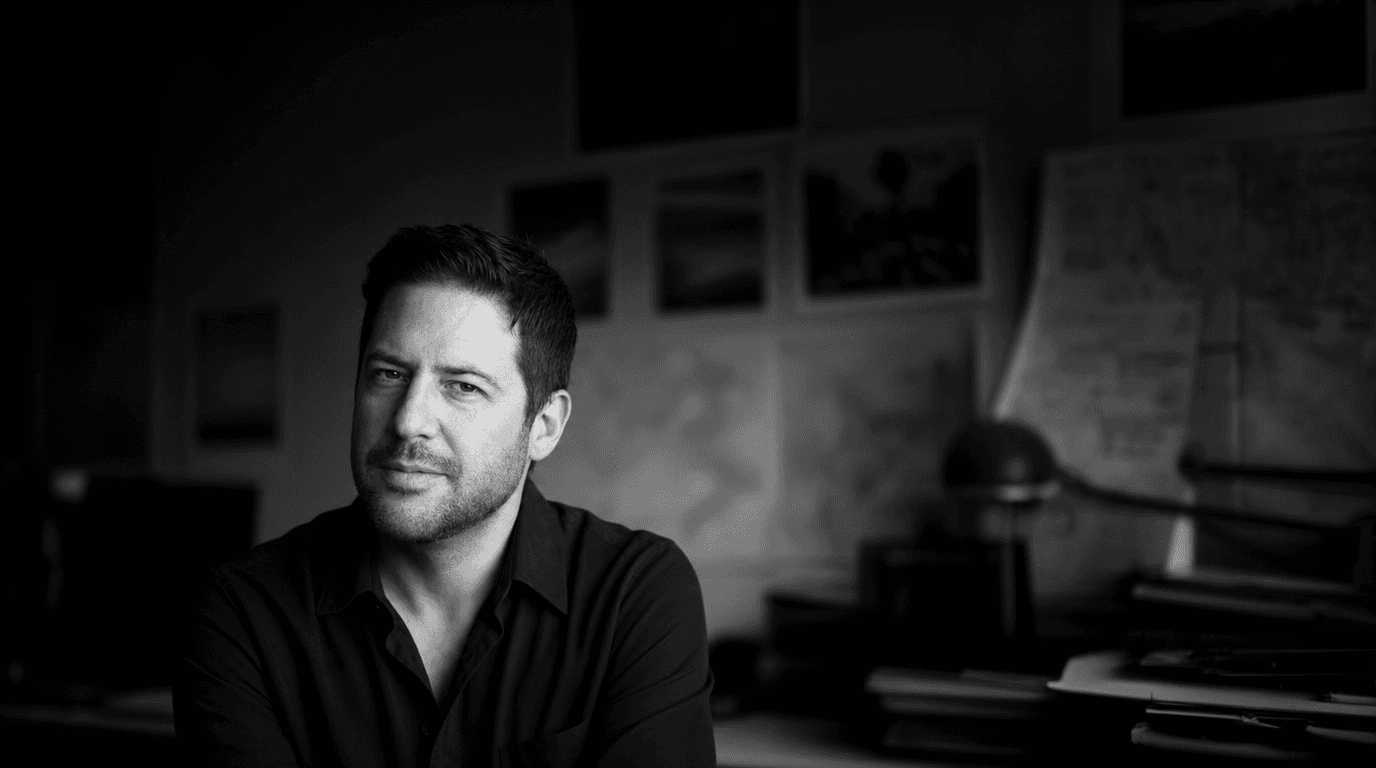
Robin Bucciarelli
Founder & Principal, Temu AG
Zurich, Switzerland
MSc Computer Science & Economics, University of Zurich
Studied it before it mattered. Doubted it when it came back. Built with it when it finally clicked.
I studied computer science and economics at the University of Zurich, including artificial intelligence. I studied it before it was fashionable to care about it, which is precisely why I did not trust it when it came back around.
I founded Temu at the right moment: just as the commercial web was finding its footing. The insight was simple. Every company would want a presence online. It turned out to be correct. We built those experiences. It worked.
When AI began to resurface as a serious topic, I was not impressed. I had studied the history. Decades of ambitious claims, followed by decades of underwhelming results. I had no particular reason to think this time would be different. The vibe-coding wave arrived, and my first reaction was to laugh. I knew what a trained engineer could do. A person prompting an AI with no software background was not a competitor.
Then I actually looked at what the language models could do with code. I was flabbergasted.
That was the moment. Not a gradual shift. A clean break. The conclusion was simple and unsentimental: my job, in its current form, was dead. Temu, as a web development company, was dead. Two options: let it die, or pivot. Fast.
I pivoted. And the direction was obvious. Not away from technology, but deeper into it. A builder, not a bystander, applies AI differently. Twenty years of engineering judgment do not disappear when better tools arrive. They multiply.
What Temu is now.
Intelligent web experiences. That is the simplest description of what Temu builds. Precise, considered digital environments where the web and AI work as one system, not as two departments that have been asked to collaborate.
Most AI tools require the web as their delivery layer. A customer support agent, a content platform, a publication, a product configurator: all of them live on the web. Building the intelligence and building the surface it runs on are the same discipline at different scales. Temu does both, from one relationship, one brief, one coherent point of view.
The proof of concept is this: Mechane, a fully functional editorial platform, built by one founder and a cohort of AI agents, faster than a conventional team could have managed. That is what it looks like when a builder, not a bystander, applies AI seriously.
Precision
Exact enough to be useful. Not a word more.
Pragmatism
The right answer, not the impressive one.
Directness
One principal. You talk to the person doing the work.
Humility
Confident in what I know. Honest about what I don't.
The next chapter.
Artificial intelligence does not stand still, and neither does the work. Every engagement produces something new: a tool, a workflow, a lesson that goes back into the practice. The agents I am building, Iris at Mechane and Janus (an AI built to guide visitors and answer questions at temu.studio), are not prototypes. They are colleagues. They will be more capable next year than they are today.
In five years, Temu will be one person running something that would have required a team of fifty a decade ago. Not because the work is simpler, but because the tools are finally worthy of the judgment it takes to use them well. The constraint on what Temu can accomplish is no longer technical capability. It is time and discernment, both of which remain mine.
I am not building this to sell it. I am building it to live inside it. That is a different kind of incentive, and the clients who work with Temu over time will feel the difference.
If this sounds like the kind of engagement you want, let's talk.
Start a conversation